Don’t Make It Weird: How Swedish Death Cleaning and Kin Bins are Really About Joy, Not Grief
Nobody in the decluttering world has worse PR than Swedish Death Cleaning. Not only is the name an immediate yikes, but a brief synopsis can also go awry.
It’s cleaning out your house so that when you die, it’s not as much of a hassle.
Okay, yes, but also, no.
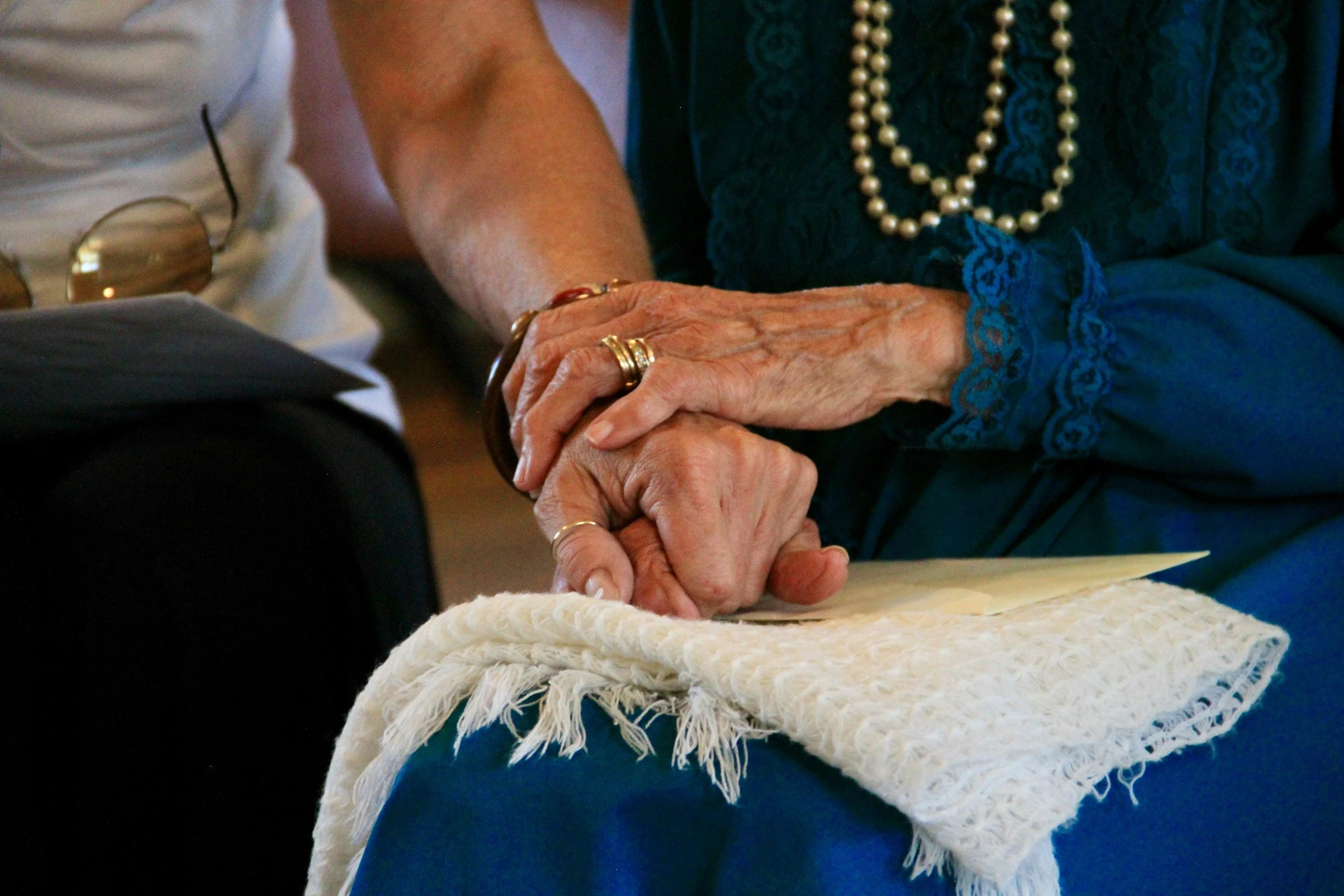
SDC was born out of efforts to reduce the burden on grieving family and spouses when a loved one dies, BUT it’s not as morbid as it sounds. Women statistically live longer than men, so most of the time, a woman, who has just lost her partner, is faced with downsizing and packing up an entire life’s worth of items. The emotional and physical weight of that task is heaped on top of the mourning process, sometimes with a tight timeline - perhaps the grieving spouse is no longer able to care for the home in the absence of their partner.
After studying the method myself several years ago, it’s not as simple as “no one will want my baseball cards when I’m dead.” It’s an act of love.
If you, dear reader, should happen to go to the Great Beyond before your family, your loved ones will be devastated. That is unavoidable. But, in case that happens someday in the distant future, you can give them the gift of a simple transition.
We start logically - do they know where to find your accounts and login credentials so they can keep the lights on? A clear list of financial institutions, credit cards, utilities, and other revolving payments would help. Do you have a will, and if so, can your family easily locate it? Save the sibling infighting and have your notarized paperwork in a central location. Do you already employ professionals to manage your finances and legal concerns? Keep their names, jobs, and contact info up to date.
Then comes all the stuff. I have a client who sends his children a letter each year with the above information clearly stated, but also the make and model of vehicles, and approximate value of anything his children will need to sell should he suddenly pass, like real estate and jewelry. It’s not that he owns millions of dollars worth of diamonds and Lamborghinis, it’s just one less scavenger hunt for his family in the event he’s not around to help.
When sifting through clothing, bath products, hair care, etc, most will get donated or trashed. Open products can’t be given to resale shops, and clothing is best donated in bulk at this stage; can you imagine having to identify which blouses of Mimi’s might be valuable enough to sell? That’s a slow and tedious process that often doesn’t yield a return on your investment.
We know every grandma in town has a house full of collectibles. From scribbled art you gave her as a child to the hundreds of fragile figurines that are both ubiquitous and also so rare they are valuable (no they are not, even if you have the certificate of authenticity), someone will have to deal with it in your absence. If, like me, you are an Elder Millennial, I can almost guarantee there are Beanie Babies somewhere in Mom’s attic. A hundred mugs from around the world. A freezer that’s more time capsule than food storage.
Remember: the memories exist in you, not in the stuff. Family members will remember you for how they felt when in your presence, not because you bequeathed to them your extensive collection of nails, screws, and drill bits.
If tragedy strikes, wouldn’t it be nice if you had already pared down your excess before your family was faced with the task of divvying it up? Another client had her daughters point out which pieces of jewelry they’d like to inherit someday, made sure the lists were fairly equal, and kept a hard copy for the future. Can you imagine if all Mom’s sentimental jewelry went to the first sibling to reach the house and grab it? (Things like this can also be put in your will, if you suspect there will be arguments.)
If you’re hearing “Swedish Death Cleaning” and are haunted by your own mortality, decenter yourself and think about those who will be left behind to deal with the aftermath. Losing you is hard enough without having to fight over your possessions, figure out what has enough value to resell, and having the lights shut off in the middle of the clean-out because nobody knows your utility login. Don’t do it because WebMD thinks your stubbed toe is terminal cancer, do it so decades from now your family can take time to celebrate your life withing wading through every item you’ve acquired during that life.
In an emergency, it helps to have a “Go Bag,” and not just for CIA operatives whose identities are revealed. We pack a hospital bag when it’s nearly time to give birth, or keep a stash of fresh batteries, flashlights, bottles water, and shelf stable foods in case of a hurricane or snow storm. Next of Kin Bins, or Kin Bins, are the answer when preparing for the inevitable.
If you have the ambition and time, you can create separate bins for each person you assume will have a role in closing your chapter. Your son Joe gets a bin with information about the family finances and how to pay off credit cards, keep up with bills, including your medical bills. Your daughter Meg is power of attorney, has access to your medical records, and knows your wishes when it comes to donating organs and whether you’ve arranged for a family burial plot. Your sister Anne has instructions for distributing the remaining assets, and is the point of contact for the lawyer who is handling your will. Within those containers you can leave instructions, words of thanks, or a small sentimental item you’d like them to have.
Otherwise, put all the Kin necessities together so that there isn’t a frantic search for paperwork. Label. Everything. It’s okay to ask if your family is they’re interested in some of your belongings, like wedding china or a family Bible, but try not to take it personally if they decline. They have their own inevitable futures to prepare for, and there probably isn’t room next to the trunks full of Beanie Babies, anyway.
When I was studying SDC, death wasn’t on the horizon. The practice appealed to me as someone who was living a life littered with emergencies. I had been diagnosed with an autoimmune disease that was not well controlled, and during one trip to the ER I started to panic, thinking I might need to stay in the hospital over night.
I had babies at home that needed care, and my husband was not fully prepared for my somewhat chaotic system of organization. And, heaven forbid I had to explain to him which clothes I needed from my closet. I need comfortable leggings, but not the pair with the bleach stains, those are in case I want to paint the walls, and the not the pair that’s all pilled, or the pair next to those that’s too loose… Why, oh why, did I own so many clothes that wouldn’t bring me comfort on my worst day? Not to mention the socks, but not ankle socks, I want fuzzy socks, and those are in a different drawer from the rest of the socks.
I took the teachings of SDC and applied them to any urgent situation. What if I was suddenly in the hospital? Got the flu? Or just got stuck in traffic?
Would the babysitter be greeted by 7 crusty expired bottles of baby Tylenol if my kid wasn’t feeling well?
Would the person stepping into my shoes have to dig through junk to figure out how to manage in my absence?
Would my chaos create undue suffering for anyone I left at home?
If someone had to search my house, would I be embarrassed by what they found?
I used these cues when decluttering and organizing my own home. I ended up creating a clear and concise system that could be maintained by an outsider, just in case a new caregiver had to step in. I got rid of anything that didn’t serve my current lifestyle, so the stuff I actually liked would be front and center. I ditched excess skincare and makeup that was collecting dust from a time when I had the patience to attempt eyeliner. I got realistic about today, and prepared for tomorrow. And I labeled. Everything.
Death Cleaning has an unfortunate name, but it’s not drudgery, it’s a gift. Taking care of your chaos before it’s urgent is a blessing to your family, and that will bring you joy as you tidy. Fill your heart and mind with the immense kindness of helping your loved ones, even if you’re not present.